
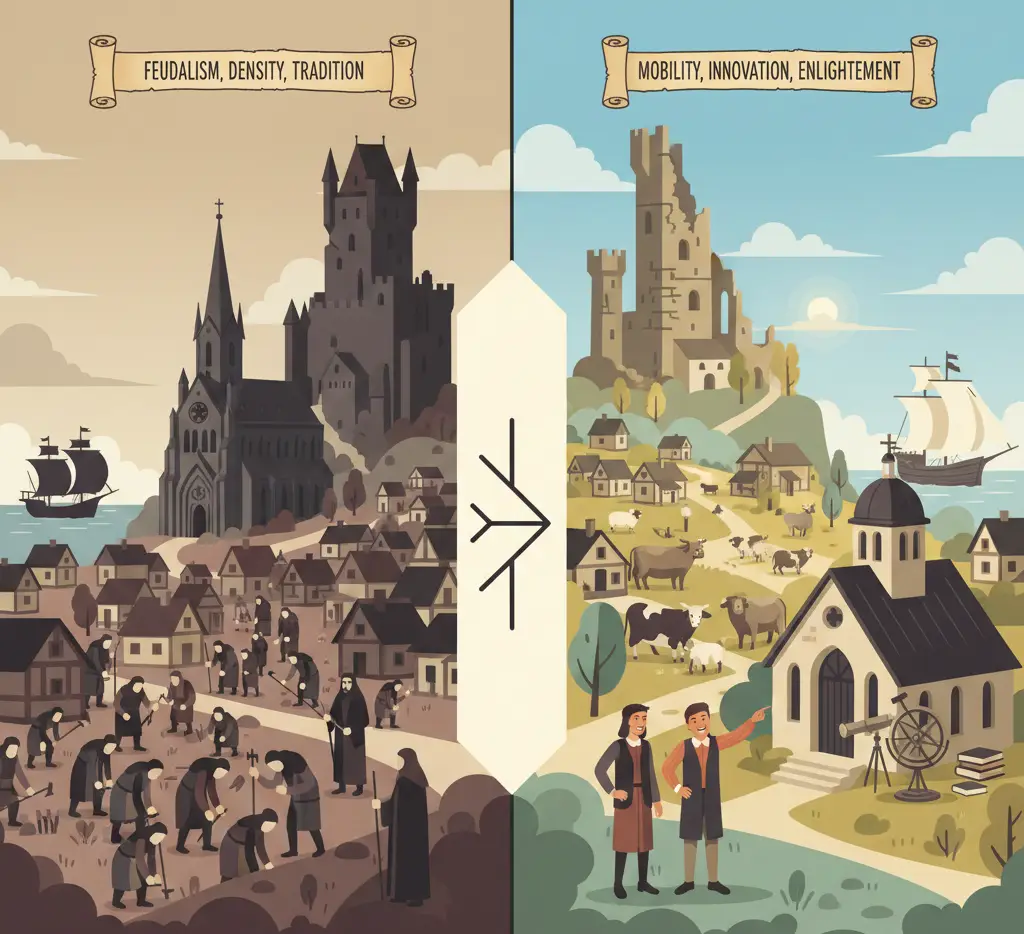
Imagine a time when a terrible sickness swept across the world, changing everything. That’s exactly what happened with the Black Death, one of the worst pandemics in all of human history. It wasn’t just a bad flu; it was a deadly disease that killed millions of people in Europe between the years 1347 and 1351. Think about that – in just four years, so many people died that it completely changed how people lived, worked, and even thought about the world.
What Was the Black Death?
The Black Death was caused by a tiny germ called Yersinia pestis. You couldn’t see it, but it was incredibly powerful. This germ traveled on ships from Asia, carried by fleas that lived on rats. These ships landed in Sicily, an island in Italy, and from there, the sickness spread like wildfire across Europe.
There were a few different ways this terrible disease showed itself:
- Bubonic Plague: This was the most common type. People would get swollen, painful lumps called “buboes” in their armpits, neck, or groin. They would also get a fever and be in terrible pain.
- Pneumonic Plague: This type affected the lungs, making it hard to breathe. It was especially dangerous because it could spread directly from person to person through the air when someone coughed or sneezed.
- Septicemic Plague: This was the rarest and most deadly form, where the germ infected the blood. People would often die very quickly.
No matter the type, the Black Death was devastating. It’s estimated that about 25 million Europeans died – that’s like losing one out of every three people! Imagine your town, your school, your family, with a third of the people suddenly gone. It was a tragedy on a scale that’s hard to even imagine.
How Did Life Change?
The Black Death wasn’t just about people getting sick and dying. It caused huge changes that lasted for hundreds of years. Think of it like a giant reset button for Europe.
Before and After the Black Death
| Aspect of Life | Before the Black Death | After the Black Death |
| Society | Most people were peasants tied to a lord’s land. They had very little freedom and were basically servants. | With fewer workers, survivors demanded better pay and freedom. Feudalism began to break down. |
| Economy | There were plenty of workers, so wages were low. Farming mostly focused on grain. | Labor became expensive. Farmers switched to raising animals, and surviving peasants became wealthier. |
| Religion | The Church was the center of life and held all the answers. Priests were highly powerful. | Many priests died or fled. People began to question the Church’s power, leading to the Reformation. |
| Culture | Art and medicine followed old, ancient rules. Life was seen as a fixed cycle controlled by the Church. | Art focused on human emotion. Failure of old medicine led to scientific observation and new universities. |
The End of Feudalism
Imagine a pyramid where the king is at the top, then noble lords, and at the very bottom, a huge number of peasants who did all the hard work. This was the feudal system. Peasants were tied to the land and had to work for their lord in exchange for a place to live and protection. They couldn’t leave or get paid much.
But when the Black Death hit, so many peasants died that there was a massive shortage of workers. Suddenly, the surviving peasants had power! If a lord wanted his fields farmed, he had to pay the peasants more, give them better conditions, or even let them own their own land. If a lord refused, the peasants might just leave and find another lord who would treat them better.
This shift in power often led to rebellions, where peasants fought against lords who tried to keep the old ways. Slowly but surely, the feudal system began to crumble, and people had more freedom and opportunities. It was like going from a world where everyone had a set place to a world where you could move up and improve your life.
Changes in Money and Work
At first, the economy was a mess. Trade stopped, and people weren’t making things because they were too sick or had died. Prices for goods went up, but the value of land went down because there weren’t enough people to work it.
However, in the long run, things got better for the survivors. Because there were fewer people, those who were left had more wealth. They could demand higher wages, and they often had more food and better living conditions.
The shortage of workers also pushed people to be creative. Instead of growing lots of grain, which needed many hands, farmers started raising more animals, like sheep. This needed fewer people and could still provide food and wool. This change helped spread wealth around more fairly, reducing the gap between the rich and the poor. It showed that even from a disaster, new ways of doing things could emerge.
A New Look at Religion
Before the Black Death, the Church was the center of everything. People believed that God was punishing them for their sins with the plague. This led some people to become even more religious, like the Flagellants, who would whip themselves to show their devotion.
But at the same time, the Church’s power started to weaken. So many priests died that new, young, and often inexperienced priests had to take their places. Some priests even ran away from the plague, refusing to help the sick. When the Church couldn’t explain why the plague was happening, or offer a cure, people started to lose faith in its leaders. They began to question things and think for themselves about their beliefs. This questioning eventually helped pave the way for a huge religious movement called the Reformation, which changed Christianity forever.
Art, Ideas, and Thinking
The Black Death had a deep impact on how people thought and felt. It was a scary and sad time, and this showed up in art and literature. Paintings and stories often focused on death, skeletons, and the sadness of life. There was a new realism, showing intense emotions and the idea that everyone, no matter how rich or powerful, would eventually die.
But this terrible experience also sparked new ideas. Doctors realized that the old ways of treating sickness, based on ancient ideas, weren’t working. This made them start looking for new, more scientific ways to understand diseases. People began to observe, experiment, and learn through what they saw, not just what old books said. This new way of thinking led to the creation of new universities and helped kickstart the Scientific Revolution, a time when many amazing scientific discoveries were made.
The Black Death: A Turning Point
In conclusion, the Black Death was far more than just a terrible disease. It was a massive turning point in history. It shook Europe to its core, destroying old systems and forcing people to adapt and innovate. It led to the decline of feudalism, changed how people earned money, made them question their faith, and even sparked new ways of thinking about science and art. From a period of immense suffering came a new world, one that was, in many ways, more free, more innovative, and ready for the amazing changes that would come in the centuries that followed. It reminds us that even in the darkest times, humanity can find ways to change, grow, and build a new future.