
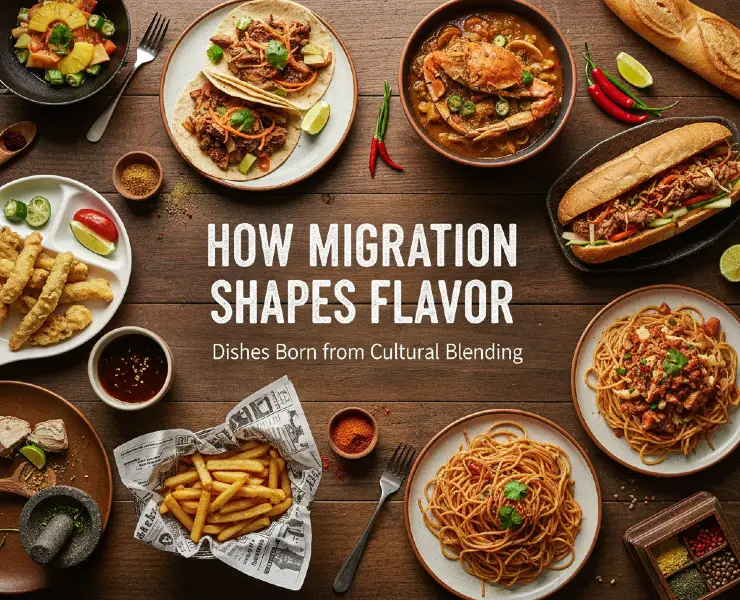
Food is more than just fuel; it is a map of human history. When people move, they carry their favorite recipes, spices, and techniques with them like precious cargo. This movement creates a “delicious collision” where old traditions meet new ingredients.
As migrants settle in new lands, they often find that their traditional ingredients are missing. To survive and thrive, they adapt their cooking by using what is available locally. This creativity is the heartbeat of cultural blending, turning “foreign” food into local favorites.
These new dishes aren’t just accidents; they are symbols of resilience. They tell stories of how different groups learned to live together and share their cultures. Migration doesn’t just change where people live; it fundamentally changes what the entire world eats for dinner.
Today, we take many of these blended flavors for granted. From spicy noodles to savory pastries, the most famous “national” dishes often have immigrant roots. Understanding these connections helps us appreciate the diverse world we live in and the flavors we enjoy.
The Spice Trade and the Birth of Curry
Long ago, the quest for black pepper and cinnamon launched massive ships across the ocean. As traders from Europe and Asia met, they exchanged powerful spices that changed cooking forever. This era laid the groundwork for the complex, aromatic world of modern curry.
From India to the World
When the British occupied India, they became obsessed with local spices but found them too complex to replicate. They created “curry powder” as a convenient shortcut to take back home. This commercial blend helped spread Indian-inspired flavors to every corner of the British Empire.
In Japan, curry arrived via British sailors rather than directly from India. The Japanese adapted it into Katsu Curry, a thicker, sweeter sauce served over fried cutlets. This shows how a single idea can transform as it migrates through different cultural filters.
The Caribbean also has its own unique curry traditions. Indentured laborers from India brought their turmeric and cumin to islands like Jamaica and Trinidad. They blended these spices with local Scotch bonnet peppers, creating a fiery, tropical version of the original dish.
Al Pastor: The Lebanese Root of Mexican Tacos
If you walk through Mexico City, you will see giant “trompos” of marinated pork spinning near open flames. While this looks uniquely Mexican, it actually began with Lebanese immigrants in the early 20th century. They brought the tradition of spit-roasting meat to their new home.
The original Lebanese dish was shawarma, usually made with lamb and served on pita bread. However, Mexican cooks swapped the lamb for pork, which was more common and affordable. They also replaced the pita with the iconic corn tortilla, a local staple.
To give the meat a local kick, they added dried chilies and achiote. These deep red spices replaced the Middle Eastern herbs like parsley and sumac. This brilliant adaptation turned a Mediterranean classic into a beloved pillar of Mexican street food culture.
Finally, the addition of pineapple on top of the pork was a stroke of genius. The fruit’s acidity helps tenderize the meat while adding a sweet contrast to the spice. It is a perfect example of how migration creates flavors that never existed before.
Banh Mi: A French-Vietnamese Fusion
The Banh Mi sandwich is a masterclass in balancing textures and tastes. It features a crispy baguette filled with savory meats, pickled vegetables, and fresh herbs. This world-famous sandwich was born from the French colonial presence in Vietnam during the 1800s.
The Baguette Evolution
The French brought wheat bread, pâté, and mayonnaise to Southeast Asia. Initially, these were luxury items only the wealthy could afford. Over time, Vietnamese bakers began mixing rice flour into the dough to make the bread lighter and more affordable for everyone.
By the 1950s, people in Saigon began adding local ingredients like cilantro, chili, and daikon radish. This replaced the heavy French butter with bright, crunchy flavors. The sandwich transformed from a European import into a distinctly Vietnamese street food staple.
Today, Banh Mi is a global sensation, found in almost every major city. It represents a painful history turned into something beautiful. It proves that even under difficult circumstances, people can blend cultures to create something that the whole world loves.
The Soulful Journey of Cajun and Creole
In Louisiana, the food is a thick, flavorful melting pot of French, African, and Spanish influences. Gumbo and Jambalaya are the results of many different groups being forced together in the American South. Each group added their own “secret ingredient” to the pot.
The French contributed the roux, a base made of flour and fat that thickens soups. West African migrants brought okra, which gave Gumbo its name and unique texture. Spanish settlers added their love for peppers and tomatoes, similar to their native paella.
Creole cooking typically happened in the cities and used expensive spices and tomatoes. Cajun cooking, however, was developed by French-Canadian refugees in the rural swamps. They focused on “one-pot meals” using whatever seafood or game they could catch that day.
These dishes were born out of necessity and shared knowledge. Native Americans even contributed “filé powder,” which is made from ground sassafras leaves. This blend of four or five different cultures created a flavor profile that exists nowhere else on Earth.
Tempura: The Portuguese Gift to Japan
Many people think of Tempura as an ancient Japanese invention, but it actually has European origins. In the 16th century, Portuguese missionaries arrived in Japan. They brought a tradition of frying vegetables and fish in a light, airy batter.
The name “Tempura” comes from the Latin word tempora, referring to religious fasting periods. During these times, the Portuguese ate fried vegetables instead of meat. Japanese cooks saw this technique and refined it using their own local ingredients and lighter oils.
The Japanese improved the batter by making it ice-cold and thin. This created a delicate, crispy shell that didn’t feel heavy or greasy. It became a popular snack sold at street stalls and eventually moved into high-end, specialized restaurants.
This exchange shows that migration isn’t always about moving large groups of people. Sometimes, just a few travelers can introduce a single technique that changes a nation’s food culture. Today, Tempura is a proud and essential part of Japanese identity.
Chifa: The Chinese-Peruvian Connection
In Peru, “Chifa” refers to a unique style of cooking that blends Chinese techniques with Peruvian ingredients. In the late 1800s, thousands of Chinese workers moved to Peru for jobs. They brought their woks and a deep love for stir-frying.
The most famous Chifa dish is Lomo Saltado, a beef stir-fry. It uses traditional Chinese soy sauce and ginger but adds Peruvian potatoes and yellow ají chilies. It is often served with both rice and fries, showing the dual heritage on one plate.
Chinese immigrants also introduced new vegetables to South America, like ginger and scallions. These ingredients grew well in the Peruvian soil and quickly became part of the local pantry. This fusion was so successful that Chifa restaurants are now found everywhere in Peru.
This cultural blending worked because both cultures valued fresh ingredients. The high-heat stir-frying helped preserve the crunch of Peruvian veggies while adding savory Chinese depth. It is a savory reminder of how migration enriches the culinary landscape of a country.
Fish and Chips: A Jewish and French Hybrid
While Fish and Chips is considered the ultimate British meal, its components are immigrant inventions. Fried fish was brought to England by Spanish and Portuguese Jews in the 16th century. They coated fish in flour to keep it fresh for the Sabbath.
The Chip Connection
Potatoes, meanwhile, came from the Americas and were turned into “chips” by either the French or Belgians. For a while, these two items were sold separately on the streets of London. It wasn’t until the 1860s that someone thought to put them together.
The first official Fish and Chip shop was likely opened by a Jewish immigrant named Joseph Malin. This cheap, filling meal became the fuel for the Industrial Revolution. It provided a hot, nutritious dinner for workers who had very little time or money.
During World War II, Fish and Chips was one of the few foods never rationed in Britain. The government knew that this “immigrant dish” was vital for keeping up the spirits of the public. It shows how blended food can become a national symbol.
The Global Spread of Italian Pasta
Pasta is now a staple in almost every home, but its history is a tangle of migration. While we associate it with Italy, noodle technology likely traveled along the Silk Road from Asia. Once it reached the Mediterranean, it was transformed by local climate.
When Italian immigrants moved to America in the late 1800s, they found that meat was much cheaper. Back in Italy, meatballs were small and served rarely. In New York, they grew massive and were piled onto spaghetti, creating the famous “Spaghetti and Meatballs.”
Similarly, in places like Argentina, Italian migration was so massive that gnocchi became a national tradition. Every month on the 29th, Argentinians eat gnocchi for good luck. This shows how a migrated dish can create entirely new cultural rituals in a new land.
Pasta’s success is due to its incredible versatility. Whether it is mixed with spicy tomato sauce in Italy or creamy Alfredo in America, it adapts perfectly. It is the ultimate “blank canvas” for cultural blending and migration-driven creativity.
Conclusion: A World of Shared Food
Migration is the secret ingredient that keeps the world of food exciting and evolving. Every time someone moves across a border, they bring a piece of their home to share. This sharing makes our global community stronger and much more flavorful.
When we eat these blended dishes, we are participating in a centuries-old conversation. We are tasting the history of trade, the bravery of refugees, and the cleverness of home cooks. Food reminds us that we have more in common than we might think.
So next time you enjoy a taco, a bowl of curry, or a sandwich, think about its journey. Appreciate the people who kept those recipes alive and the new neighbors who helped improve them. Diversity doesn’t just make our world better; it makes it taste better.