
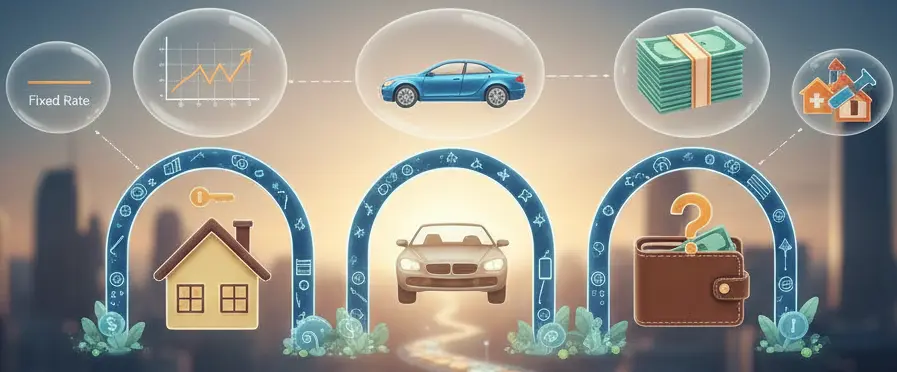
In today’s world, picking the right loan can make a big difference for your money and your future goals. Whether you want to buy a house, get a new car, or pay for a surprise expense, it is important to understand the different choices you have. This article looks closely at different types of loans, including mortgages, car loans, and personal loans. It also highlights the things that should guide your decision. By looking at key details like interest rates, credit scores, and how long the loan lasts, you will be ready to make choices that fit your needs.
Understanding the Basics of Loan Types
Types of Secured vs. Unsecured Loans
When looking at loans, it is helpful to know the two main categories. Secured loans are backed by something of value you own, called collateral, such as your house or car. If you do not repay the loan, the lender has the right to take that property to get their money back.
Unsecured loans do not require any collateral. Lenders approve these loans based on your credit history and your promise to pay them back. If you miss payments, the lender cannot take your physical assets immediately, but they can send your debt to a collection agency, which will badly hurt your credit score.
Common Loan Terminology Explained
Loan documents can sometimes use difficult words. Here are a few important terms made simple:
- Principal: This is the starting amount of money you borrow. It is the price of the loan before any extra costs are added.
- Interest Rate: This is the cost you pay to borrow the money, usually shown as a percentage. It is money you pay on top of the principal.
- Term: This is the length of time you have to pay back the loan. It tells you exactly how many months or years you will be making payments.
Evaluating Mortgage Options: Fixed vs. Adjustable Rates
Advantages and Disadvantages of Fixed-Rate Mortgages
A fixed-rate mortgage offers stability. The interest rate stays exactly the same for the entire life of the loan. This means your monthly payment for principal and interest will never change, making it easy to budget. However, if market interest rates go down later, your rate will stay at the higher number unless you refinance. Also, fixed-rate loans often start with a slightly higher interest rate compared to adjustable options.
Understanding Adjustable-Rate Mortgages (ARMs)
Adjustable-rate mortgages (ARMs) usually start with a lower interest rate than fixed-rate loans. This can help you save money in the beginning. However, after a set period of time, the rate can change (go up or down) based on the market. This means your monthly payment could increase unexpectedly. It is important to read the details to see how much the rate is allowed to change so you are prepared for higher payments.
Choosing the Right Mortgage Type for Your Needs
Deciding between a fixed and adjustable rate depends on your plans. If you want a steady payment and plan to stay in the home for a long time, a fixed-rate mortgage is likely the better choice. If you plan to move or sell the house in a few years, an ARM might save you money because of the lower starting rate. Always think about your future plans before deciding.
Auto Loans: Key Considerations and Comparison
New vs. Used Car Loans: What You Need to Know
Are you looking at a brand-new car or a used one? New car loans often come with lower interest rates and the benefit of a warranty. However, new cars lose value very quickly as soon as you drive them home. Used car loans often have higher interest rates, but the car usually costs less overall because it has already gone through that initial drop in value. Both options work, but you must decide if you prefer a lower rate or a lower total price.
Loan Terms and Monthly Payments Explained
When you get a car loan, the term length (how many months you pay) changes your monthly bill. A longer term means you pay less each month, but you will pay more in total interest by the time the loan is finished. A shorter term means higher monthly payments, but you clear the debt faster and pay less interest overall. Make sure to check the total cost, not just the monthly payment.
Understanding the Importance of Down Payments
A down payment is the money you pay upfront when you buy the car. A larger down payment helps you in two ways: it lowers the amount you need to borrow, which lowers your monthly payment, and it usually gets you a better interest rate from the lender. Putting more money down shows the lender you are financially stable.
Personal Loans and Their Impact on Your Finances
Types of Personal Loans Available
Personal loans can be used for many different things. Like other loans, they can be secured (backed by something you own) or unsecured (backed only by your credit history). Unsecured personal loans often have higher interest rates because they are riskier for the lender. There are also debt consolidation loans, which are designed specifically to combine multiple debts into one single payment to make managing money easier.
When to Consider a Personal Loan
Personal loans are helpful tools when used correctly. They are good for necessary costs like medical bills, home repairs, or paying off high-interest credit card debt. However, it is usually not a good idea to use a personal loan for unnecessary spending, like luxury items or vacations, because you will end up paying back much more than the items cost due to interest.
Managing Personal Loan Repayment
Paying back a personal loan requires discipline. To stay on track, set up automatic payments so you never miss a due date. This helps you avoid late fees and keeps your credit score healthy. If you treat the repayment like a mandatory bill, you will pay off the debt steadily and avoid financial stress.
The Role of Credit Scores in Loan Approval
How Credit Scores Are Calculated
Your credit score is a number that tells lenders how good you are with money. Scores usually range from 300 to 850. The score is made up of five main parts:
- Payment history (35%): Do you pay bills on time?
- Amounts owed (30%): How much debt do you have compared to your limits?
- Length of credit history (15%): How long have you had credit accounts?
- New credit (10%): Have you applied for many new loans recently?
- Types of credit used (10%): Do you have a mix of credit cards and loans?
Improving Your Credit Score Before Applying
If you want a better loan offer, try to improve your credit score first. Start by paying down your current debts and making sure every bill is paid on time. You should also check your credit report for any mistakes. If you find an error, report it so it can be fixed. Sometimes, being added as an authorized user on a family member’s account (if they have good credit) can also give your score a small boost.
The Impact of Your Credit Score on Interest Rates
Your credit score directly affects how much a loan costs you. Generally, a higher score gets you a lower interest rate, which saves you money. A low score might mean a high interest rate, costing you significantly more over the life of the loan. Keeping your score high is one of the best ways to save money when borrowing.
Interest Rates: How They Affect Your Loan Choices
Factors Influencing Interest Rates
Interest rates change based on several things. Economic factors, such as inflation and the job market, affect rates for everyone. On a personal level, your credit score, the type of loan you want, and the lender you choose all play a part. Keeping an eye on these factors can help you understand why rates are high or low at any given time.
Fixed vs. Variable Interest Rates
There are two main types of interest rates:
- Fixed rates stay the same for the entire loan. This is safe and predictable.
- Variable rates can go up or down based on the economy. While variable rates might start lower, they carry the risk of rising later. Choosing a fixed rate protects you from future rate hikes.
How to Lock in a Favorable Interest Rate
To get the best rate, you need to shop around. Different lenders offer different prices. Once you find a rate you like, ask the lender to “lock” the rate. This guarantees that the rate will not change while your paperwork is being finished. Be aware that if rates drop after you lock yours in, you usually cannot switch to the lower one, but locking it in protects you if rates go up.
Navigating Loan Terms and Conditions
Understanding Loan Agreements
A loan agreement is a contract that explains the rules of your loan. It lists how much you are borrowing, the interest rate, the payment schedule, and any extra fees. It is very important to understand these details so there are no surprises later. Read the document carefully before signing.
Key Terms to Look For in Loan Contracts
When reading a contract, look for the APR (Annual Percentage Rate). This number includes the interest rate plus any fees, giving you the true cost of the loan. Also, check for prepayment penalties, which are fees charged if you pay off the loan too early. Knowing these terms helps you avoid hidden costs.
How to Negotiate Loan Terms
You can sometimes negotiate the terms of a loan. Start by researching what other lenders are offering. Show this information to your lender and ask if they can match or beat those offers. If they will not change their terms, do not be afraid to look for a different lender who wants your business more.
Tips for Making Informed Loan Decisions
Conducting Effective Research on Loan Options
Knowledge is your best tool. Research different lenders and loan types online. Compare interest rates, repayment terms, and fees. Reading reviews from other customers can also tell you if a lender is trustworthy. The more you know, the better loan you will find.
Utilizing Online Loan Calculators
Online loan calculators are very useful. You can type in the loan amount, interest rate, and term length to see exactly what your monthly payment would be. You can try different numbers to see how they change the total cost. This helps you plan your budget accurately.
Consulting Financial Advisors for Guidance
If loan terms are confusing, you might want to speak with a financial advisor. These professionals can explain your options clearly and help you make a plan that fits your budget. A little help from an expert can prevent costly mistakes.
In conclusion, evaluating loan options is a necessary step to reach your financial goals. By understanding the different types of loans, the rules attached to them, and what affects your approval, you can make smart choices. Take the time to research and compare, and ask for help if you need it. With the right information, you can find a loan that helps you succeed financially.