-
How Do Cheetahs Run So Fast?
Cheetahs, the fastest running land animals on Earth, can accelerate from 0 to 60 mph in just 3 seconds, but how do they do it in the first place? Firstly, these animals have light bodies, and strong muscles. If that doesn’t sound like enough to you, let me tell you their ultimate secret of running:…
-
Why Did India Choose The Bengal Tiger As Their National Animal?
You may already know that Bengal Tigers live in India, but did you know that they are also India’s national animal? In Indian culture, tigers are a symbol of elegance, strength, and tremendous power. Another season why the tiger was selected is, because of its conservation status, which jumped in 1973, when India launched Project…
-
George Clinton
George Clinton the first, and longest serving governor of New York, was born in Orange County, New York on July 26, 1739. He served as clerk of the Common Pleas Court in 1759, and was the district attorney in 1765. In 1774, George Clinton served on the New York Committee of Correspondence, and was a…
-
Komodo Dragons
These predators, located on several Indonesian islands, were first discovered in 1910 by Lieutenant van Stayn van Hensbroek. In 2009 an international research group discovered that Komodo Dragons wield a potent venom. They will eat almost any meat they can find, but their young feed primarily on small lizards and insects. If a Komodo Dragon…
-
The Vascular Tissue Of Plants
Xylem and phloem are two varieties of vascular tissue. Xylem is responsible for the transport of water and dissolved ions from the roots to the rest of the plant. Phloem transports sugars, amino acids, and some ions, from fully developed leaves to developing roots, leaves, and fruits. They typically occur together in vascular bundles within…
-
Mars
Mars, the fourth planet from the sun, is 53% smaller than Earth. It has a thin atmosphere composed of mainly carbon dioxide, nitrogen, and argon gases. Its atmosphere offers little protection from incoming meteorites and easily lets heat from the Sun escape the planet. If you were to stand on its surface, it would feel…
-
Venus
Venus, the second planet from the Sun is similar in size to Earth. However, similarities end there. Its surface is hot enough to melt lead and from the surface, due to its thick atmosphere, the Sun appears to be a smear of distant light. Venus’s day is longer then its year and it spins the…
-
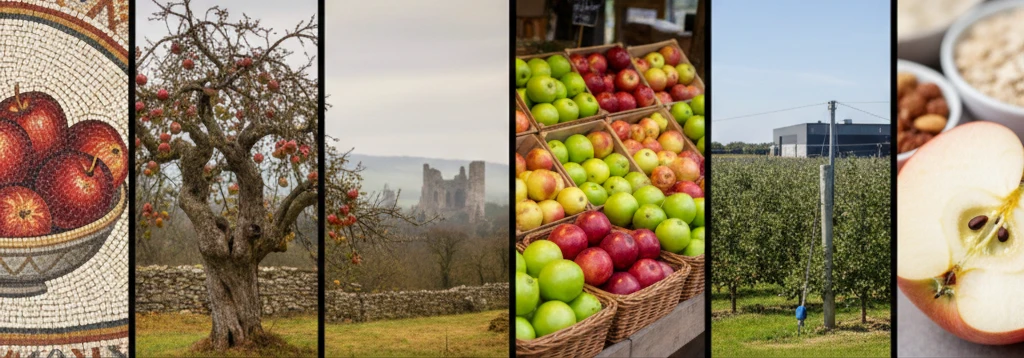
Apples
The apple, a delicacy enjoyed for centuries, was highly favored in the Roman Empire. As the empire expanded into Northern Europe, its people brought their rich traditions with them, introducing apples to the rest of the world—primarily the region that is now the United Kingdom. This historical journey laid the foundation for what would become…
-
The Sun
Of the many bodies in our solar system, the Sun is the largest. It contains 99.86% of the total mass in our solar system and could fit roughly 1.3 million Earths. The Sun is hot enough to undergo thermonuclear fusion, when hydrogen fuses together to form the heavier element, helium. It is an oblate spheroid,…
-

The Untold Story of New York: A Historical Guide from 1609 to 1918
In 1609, the Dutch claimed the New York area as part of New Netherland. The colony was a vital hub in the transatlantic fur trade and eventually transformed into a significant agricultural resource through the patroon system. A patroon was a wealthy landholder granted manorial rights to vast tracts of land. These manorial rights empowered…